
Lates News
Trump and Greenland: Geopolitics, Sovereignty, and the Arctic’s Future
Jan
In early 2026, Greenland has once again become a focal point of international geopolitics — driven largely by the controversial and ambitious stance of U.S. President Donald Trump toward the vast Arctic island. What began as a provocative idea has evolved into a full-blown diplomatic flashpoint involving the United States, Denmark, Greenland’s indigenous population, and the broader Western alliance. The issue is now not just about territory, but about sovereignty, security, and shifting global power dynamics.
A Renewed Push on Greenland – Donald Trump Greenland
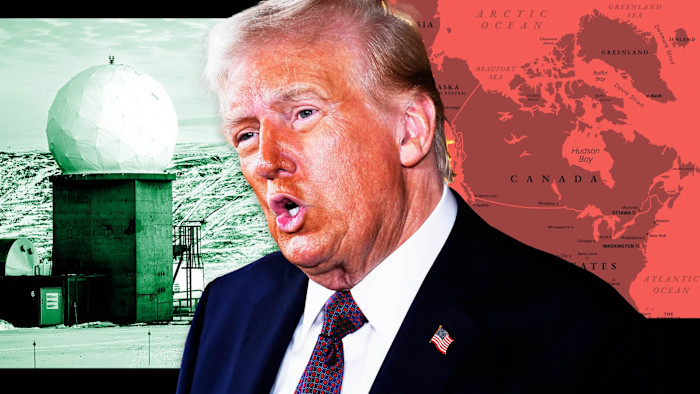
President Trump has openly stated his desire for the United States to acquire control or sovereignty over Greenland, a semi-autonomous territory of the Kingdom of Denmark. Trump argues that Greenland’s strategic location in the Arctic — particularly its position near the Greenland-Iceland-United Kingdom (GIUK) gap — makes it vital for U.S. national security in an era of intensifying great-power competition with Russia and China. According to strategic analysts, control over Greenland could enhance U.S. military positioning and early-warning capabilities in the Arctic, a region warming and opening due to climate change.
Trump has even framed ownership of the island as “psychologically important” for American strategic interests, asserting that control, rather than lease or treaty arrangements, is necessary to protect U.S. interests.
Sovereignty and Strong Opposition – Trump Greenland controversy
Despite repeated remarks from Trump, Greenlandic officials and the Danish government have been emphatic: “Greenland is not for sale.” Both the prime minister of Greenland and Danish leaders have reiterated the island’s sovereignty and the autonomy of its people.
This stance aligns with centuries-old Inuit traditions and Greenlandic law, which emphasize communal stewardship rather than foreign ownership of land. Residents of small communities, such as Kapisillit, express bewilderment at the notion that a foreign government might own their ancestral territory — reflecting a worldview that contrasts sharply with external geopolitical ambitions.
Diplomatic Tensions and European Response – Trump Greenland comments
Trump’s push over Greenland has strained diplomatic relations, particularly with European allies. At the World Economic Forum in Davos, Trump reportedly linked Greenland to U.S. security objectives, even suggesting economic penalties such as tariffs on nations opposing his plans. This prompted a rare show of unity among European Union members and NATO partners, many of whom condemned the threats and stood firmly behind Denmark’s sovereign rights.
The EU’s foreign policy leadership has described the crisis as a blow to transatlantic relations, emphasizing caution and solidarity with Denmark and Greenland. In response to the rising tensions, Denmark’s King Frederik announced plans to visit Greenland in February 2026, signaling support and reassurance to the island’s inhabitants.
Local Backlash and Protests – Trump Greenland sovereignty
Trump’s assertive rhetoric has not only sparked diplomatic ripples across Europe but has also catalyzed domestic resistance. In January 2026, thousands participated in the “Hands off Greenland” protests, the largest demonstrations in the island’s history. Protesters in both Greenland and Copenhagen rallied under slogans like “Greenland is not for sale” — underscoring the public’s rejection of external control over their homeland.
These protests reflect deep-rooted concerns not just about territorial integrity, but also cultural identity and the future path of Greenland — including debates about full independence from Denmark. While a push for greater autonomy already exists within Greenland’s political discourse, it is distinct from the idea of becoming part of another nation.
Why Greenland Matters
The island’s importance extends far beyond its dramatic landscapes and small population of around 57,000. Greenland’s strategic value is tied to a number of factors:
- Military Significance: The U.S. has maintained a military presence at Pituffik Space Base (formerly Thule Air Base) since World War II, a key node in missile defense and space surveillance networks.
- Arctic Shipping Lanes: As climate change alters ice coverage, new sea routes like those near the GIUK gap are becoming more navigable, enhancing Greenland’s importance in global trade and security frameworks.
- Mineral Resources: The island is believed to hold substantial resources, including rare earth minerals that are increasingly critical for advanced technologies. While Trump frames his push as security-driven, these natural assets add another layer to geopolitical interest.
Looking Ahead
As 2026 unfolds, the Greenland question remains a contentious and evolving issue. Trump’s initial hardline approach — including talk of tariffs and potential acquisition — has softened in some respects, with negotiations now framed in terms of a broader Arctic security framework with NATO partners. However, the fundamental disagreement persists: Greenland’s people and leaders insist on self-determination, while Trump and his administration assert U.S. strategic imperatives.
In this geopolitical clash of sovereignty, security, and identity, one thing remains clear: Greenland’s future will be shaped not just by superpower ambitions but by the voices of its own people — and their resolve to control their destiny.
For more do click here
